Sailing Catamarans Explained: Why They Suit Caribbean Day Charters
Geplaatst op 19-10-2026
Categorie: Reizen en recreatie
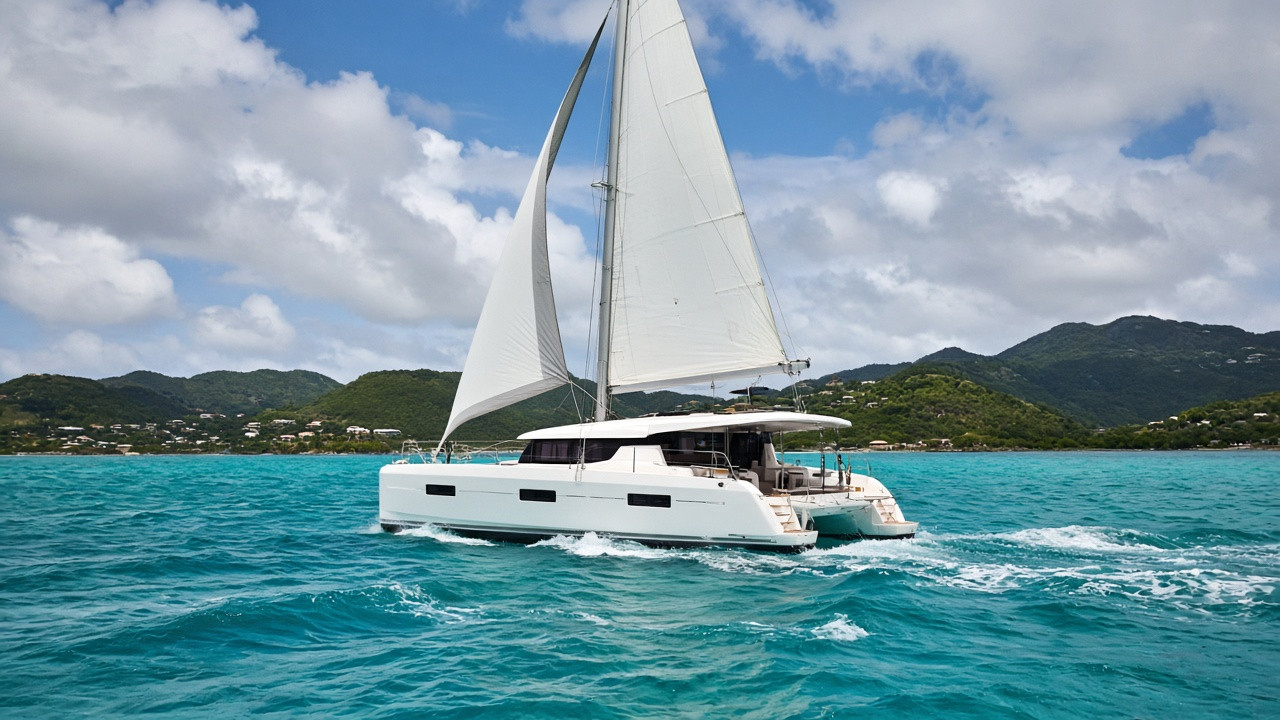
Look across almost any bay in the Caribbean and you will see them: wide, stable boats with two slim hulls and a broad deck stretched between them. Sailing catamarans have become the boat of choice for day charters across the region, from the British Virgin Islands to the Grenadines. Around St. Maarten, where calm bays and neighbouring islands sit within easy reach, they are especially popular.
But what exactly makes a catamaran different from a traditional sailboat, and why does that matter for someone who simply wants a wonderful day on the water? This article explains the basics in plain language, without technical jargon, so you know what to expect before you step aboard.
What is a sailing catamaran?
A catamaran is a boat with two parallel hulls connected by a deck or frame. A traditional sailboat, called a monohull, has a single hull and a heavy keel underneath to keep it upright. A catamaran gets its stability from its width instead. Because the two hulls are spaced apart, the boat resists rolling from side to side far better than a monohull of similar length.
Between the hulls you will usually find a large cockpit, a covered saloon and, at the front, a trampoline: a strong net stretched over the water where guests love to lie in the sun and watch the sea rush by underneath. Sailing catamarans carry a mast and sails like any other sailboat, and they also have small engines for manoeuvring in harbours and for calm spells when there is no wind.
Stability: the biggest advantage for guests
For many first-time sailors, the biggest worry is the feeling of a boat leaning over, or heeling, in the wind. On a monohull this is normal and part of the fun for experienced sailors, but it can be unsettling for beginners. A catamaran stays much flatter. Drinks stay on the table, children can move around more safely under supervision and guests who are nervous about the sea generally feel more comfortable.
Stability also helps when you are at anchor. A catamaran tends to rock less in a gentle swell, which makes swimming breaks, lunch and lounging far more relaxing. People who are prone to seasickness often find a catamaran easier to tolerate, although everyone is different and it is wise to prepare if you know you are sensitive.
Space to spread out
The second big advantage is space. Because the deck stretches across both hulls, a catamaran offers much more usable area than a monohull of the same length. On a day charter, that space translates into:
- A shaded cockpit where you can escape the midday sun.
- A front trampoline for sunbathing and watching the water.
- Wide side decks that make it easier to walk around.
- Room to store snorkeling gear, paddleboards and floating mats without cluttering the deck.
- Several separate areas, so a group can spread out instead of sitting shoulder to shoulder.
This is one reason catamarans work so well for families, groups of friends and celebrations. Some guests can chat in the shade while others stretch out in the sun, and nobody feels cramped. It is also why so many visitors who search for a sailing catamaran st maarten end up on exactly this type of boat.
Shallow draft: getting closer to the beach
Catamarans usually have a shallower draft than monohulls, which means they need less water beneath them. In the Caribbean, where many of the most beautiful anchorages are shallow sandy bays, this is a real benefit. A skipper can often anchor closer to the beach or to a snorkeling spot, so the swim from the boat is shorter and the water under the hulls is often that famous bright turquoise.
Of course, the crew always decides where it is safe to anchor based on depth, weather and local rules, including protection of reefs and seagrass. But in general, a catamaran opens up more options than a deep-keeled sailboat.
Why sailing instead of a motor boat?
Some catamarans in the Caribbean are power catamarans, driven entirely by engines. They are fast, but they offer a different experience. On a sailing catamaran, the engine is mostly switched off once the sails are up. The sound changes from a constant hum to the wind and the water against the hulls. Many guests say that moment, when the engine goes quiet and the boat starts to sail, is the highlight of the day.
There is also an environmental side. A sailing catamaran relies mostly on the wind. One operator on St. Maarten explains that its sail catamarans use about 4 liters of gasoline per hour, compared with around 80 liters per hour for an average power catamaran. For travellers who care about their footprint, that difference is significant, and it shows that a beautiful day out does not have to come with a heavy fuel bill for the planet.
How catamarans fit St. Maarten
St. Maarten is small, but it offers a surprising variety of sailing. The island is shared by French Saint-Martin in the north and Dutch Sint Maarten in the south, and its coastline is dotted with bays, beaches and small offshore islets. Many charters leave from the Dutch side; one example is Bobby's Marina in Philipsburg, which is a base for private catamaran charters with a professional crew.
If you are planning a trip, a catamaran gives you a stable platform for exploring both sides of the island and, on longer trips, the neighbouring islands. Anguilla lies just to the north and is famous for its long beaches and clear water. St. Barth lies to the southeast, with its elegant harbour and pretty bays. Both are popular destinations for full-day sails, although you should always check the current official entry and passport requirements before visiting another island.
What to expect on a typical day charter
While every trip is different, many catamaran day charters around St. Maarten follow a similar pattern. You board at the marina, receive a short welcome and safety briefing from the crew and head out under sail. After some time on the water, the boat anchors in a sheltered bay for swimming, snorkeling and relaxing. Depending on the length of the charter, there may be further stops before you sail back.
On board, guests can usually enjoy an open bar, snacks and a range of water toys such as snorkeling gear, paddleboards and floating mats. Formats vary as well: private half days, full days, sunset cruises and shared charters are common, while overnight trips and week charters can sometimes be arranged on request.
A few tips before you go
To get the most out of a catamaran charter, keep these points in mind:
- Bring reef-friendly sunscreen, a hat and sunglasses; the sun on the water is stronger than it feels.
- Wear soft-soled shoes or go barefoot on deck, as the crew prefers.
- Hold on when moving around under sail, even though the boat is stable.
- Listen to the safety briefing and ask questions if anything is unclear.
- Keep phones and cameras in a dry bag or waterproof case.
- Let the crew know about any health issues, allergies or limited swimming ability in advance.
The bottom line
Sailing catamarans have earned their place as the classic Caribbean day charter boat for good reasons. They are stable, spacious and comfortable, they can reach shallow turquoise bays and they let you enjoy the quiet magic of travelling under sail. For beginners they take away much of the anxiety of being on a boat, and for experienced sailors they offer a relaxed way to enjoy the trade winds with friends and family.
If you are visiting St. Maarten, a day on a sailing catamaran is one of the easiest ways to see the island from its best side: from the water, with the wind doing most of the work.